Matcha vs. Sencha: Which Japanese Green Tea Is Right for You?
Matcha and sencha come from the same plant, Camellia sinensis, and both end up as green tea in your cup. After that, they part ways. One is a powder you whisk into water and drink whole; the other is a leaf you steep and then discard. That single difference shapes the taste, the caffeine, the gear you need, and what you can do with each in the kitchen. Here is how the two really compare, and how to decide which belongs on your shelf.
Two Teas From One Plant
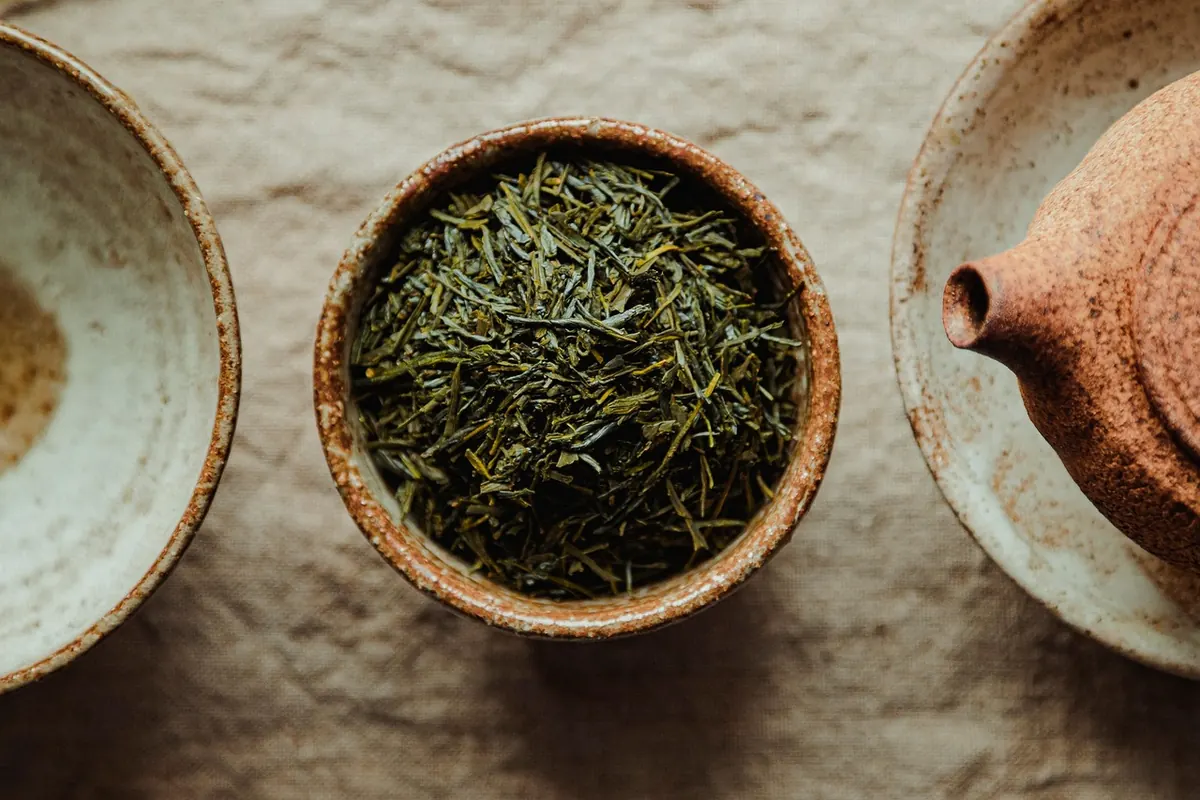
Sencha is the everyday green tea of Japan, and it accounts for most of the tea grown there. The leaves are grown in full sun, steamed within hours of picking to halt oxidation, then rolled and dried into the thin needles you see in the bag. When you brew sencha, hot water extracts flavor from the leaf, and the leaf itself goes into the compost.
Matcha takes a longer road. A few weeks before harvest, growers shade the bushes, cutting the plants off from direct sun. The plant responds by producing more chlorophyll and more of the amino acids that read on the tongue as sweetness and umami. Those leaves are steamed, dried, stripped of stems and veins to make tencha, then ground between granite wheels into a powder fine enough to stay suspended in water.
So when you drink matcha, you are consuming the entire leaf — every compound it contains. When you drink sencha, you are drinking what hot water can pull out in a minute or two. Keep that in mind, because it explains almost everything that follows.
Flavor: Bright and Grassy vs. Deep and Creamy
Good sencha tastes fresh, green, and slightly marine, with a clean astringency at the back of the tongue and a sweetness that arrives after you swallow. It is a tea of edges and lift. Within sencha there is a useful split: asamushi (light-steamed) teas are clearer, more delicate and more astringent, while fukamushi (deep-steamed) teas brew cloudy, taste sweeter, and are far more forgiving. If you have ever found sencha harsh, try a deep-steamed one before writing it off.
Matcha is rounder and heavier. A good ceremonial-grade matcha is thick on the palate, sweet-vegetal, with a long umami finish. Poor-quality matcha, or matcha made with water that is too hot, turns bitter and chalky in a hurry. That bitterness is not a flaw in the tea so much as a signal that the powder, the temperature, or the whisking went wrong.
Sencha is the taste of a steeped leaf; matcha is the taste of the leaf itself.
Caffeine: Same Leaf, Different Dose
Because you drink the whole leaf, a bowl of matcha generally delivers more caffeine than a cup of sencha made from the same weight of tea. But sencha gives you a dial to turn: cooler water and a shorter steep extract less caffeine, while hotter water and a longer steep pull out more. Matcha's dose is essentially fixed the moment you scoop the powder.
Both teas also contain L-theanine, an amino acid associated with the calm, focused feeling many drinkers describe — steady rather than jittery. If you are sensitive to caffeine, pregnant, breastfeeding, or taking medication that interacts with stimulants, treat both as caffeinated drinks and check with a doctor or pharmacist before making them a daily habit. Matcha in particular hides easily in lattes and desserts, where it is easy to lose track of how much you have had.
How to Brew Each One
Matcha
Matcha is a suspension, not an infusion, so clumps are the enemy. Sift the powder first, and use water well below boiling — around 70–80°C (160–175°F). Boiling water scorches it.
- Sift about one teaspoon (2 grams) of matcha into a bowl to break up lumps.
- Add roughly 60–70 ml of hot water, not boiling.
- Whisk briskly in a zigzag or W motion with a bamboo chasen until a fine foam sits on top, about 15–20 seconds.
- Drink it straight away, before the powder settles.
No whisk? Put the sifted matcha and water in a small jar with a tight lid and shake hard for 20 seconds. It will not be as silky, but it works.
Sencha
- Leaf: one rounded teaspoon per 200 ml of water.
- Water: 70–80°C. Let a freshly boiled kettle sit for a few minutes, or pour the water into your cup first and then into the pot.
- Time: 60–90 seconds for the first steep.
- Re-steeps: two or three more. Shorten the time and raise the temperature slightly each round; the second steep is often the sweetest.
Do not overfill the leaf. Sencha that tastes bitter is usually sencha that was brewed too hot, too long, or with too much leaf.
In the Kitchen: Where Each One Shines
Matcha is the more versatile cooking ingredient because it disperses into liquids and batters instead of steeping in them. Use it in lattes, ice cream, shortbread, sponge cakes, and dusted over desserts. Sift before adding it to dry ingredients, and choose a culinary grade for baking — it is less delicate and holds its color. Heat mutes matcha's brightness, so a batter that looks vivid green going into the oven will be duller coming out. A little goes a long way; too much turns baked goods bitter and grassy in an unpleasant way.
Sencha is less common in baking but excellent elsewhere. Brew it strong and use the liquid for ochazuke (rice with tea poured over it), light marinades, or poaching delicate fish. Cold-brew it overnight in the fridge for a smooth, low-bitterness iced tea. And do not throw away the spent leaves: chop them, dress them with soy sauce and toasted sesame, and eat them as a small side dish. Matcha, by contrast, gives you nothing to discard — you already drank it.
Which One Is Right for You?
Choose sencha if you want a tea to sip through the afternoon, enjoy brewing a pot and re-steeping it, and prefer something bright and refreshing that plays well with food. Buy it in small amounts, and finish it within a couple of months.
Choose matcha if you want a concentrated, creamy cup with a bigger lift, like the ritual of whisking, or plan to cook and bake with it. Store the powder airtight in the dark — the refrigerator is fine if the tin is sealed — and use it within a few weeks of opening, since it fades faster than leaf tea.
Honestly, many drinkers keep both: matcha for mornings and baking, sencha for long afternoons. Start with a small pouch of deep-steamed sencha and a modest tin of matcha, brew each one carefully for a week, and let your own palate settle the argument.
Photo: mirkostoedter / Pixabay