How to Taste Tea Like a Sommelier: A Beginner's Guide to Slurping, Aromas, and Aftertaste
Somewhere between "this tastes nice" and "wet stone, stewed apricot, and a faint honeyed finish" there's a version of tea drinking that belongs entirely to you. Tea sommeliers aren't born with better palates. They've simply built a habit of paying attention in a certain order, and collected a handful of words for what they find. You can borrow both this afternoon, using a cup you already own.
Set the Table Before You Taste
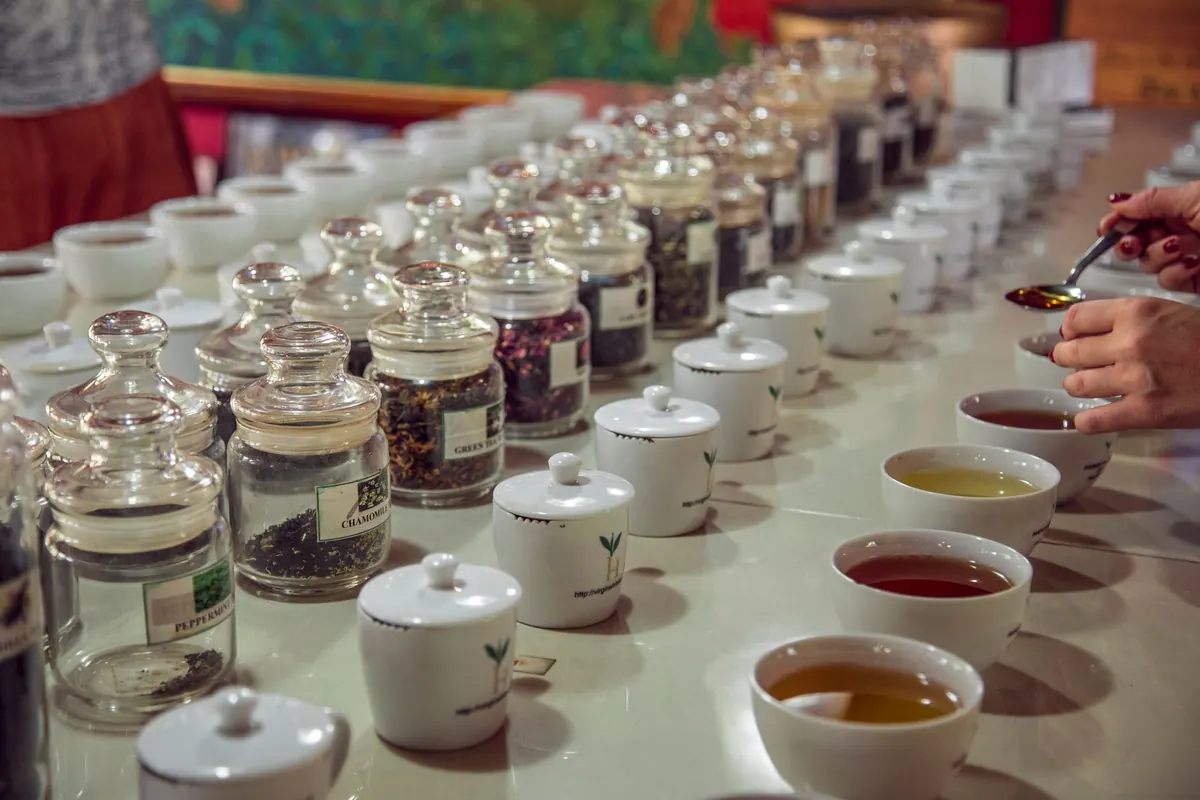
You don't need a tasting set with numbered cups. A small white cup, a spoon, a kettle you can control, and ten quiet minutes will carry you a long way. White is useful because it shows the liquor's color, which tells you something before the tea touches your lips.
Then keep everything else consistent. Same leaf amount, same water, same steep time for both teas you're comparing — otherwise you're tasting the brewing, not the tea. Small volumes help: a 100ml cup lets you take three or four sips without the tea going cold, and leaves room for a second and third infusion, where many teas show their best side.
Two more things. Skip the perfume, the scented candle, and the coffee. And don't taste on a completely empty stomach; very strong tea can feel rough that way, so eat something small first.
The Slurp Is the Whole Trick
Slurping looks theatrical and sounds worse, but it has a real job. Drawing air across the liquid sprays the tea over your palate and pushes aroma up the back of your throat — the retronasal route, where most of what we call flavor actually lives.
Here's how to do it without coughing: take a small sip, maybe half a teaspoon. Keep your lips slightly open and pursed, then inhale sharply and briefly through your mouth, as if you're cooling soup. The tea should crackle and spray, not slide down the wrong pipe. A little noise is the point.
Now hold it. Let the tea travel across your tongue and notice where it registers. Sweetness tends to show up at the tip, sourness and drying astringency along the sides, bitterness toward the back. Swallow or spit — spitting is fine, and it keeps your head clear across many cups.
Aroma Comes in Three Passes
Most beginners sniff the cup once and move on. Give the aroma three separate looks and you'll catch three different teas.
1. The dry leaf
Warm your empty cup or gaiwan with hot water, pour it out, and drop in the dry leaves. Give it a shake, then smell. This first pass is often faint and a bit dusty, but it hints at roast level, age, and storage.
2. The wet leaf
After the water hits, and again right after you pour, smell the leaves themselves. This is the loudest, most generous moment. Let the steam thin for a few seconds first — scalding vapor flattens everything into "hot water."
3. The empty cup
Once the tea is gone, smell the cup. Some oolongs leave a honeyed, floral residue that outlasts the flavor by minutes. Cooled tea in the pitcher is worth a sniff too; it often shows fruit and mineral notes that were hidden while hot.
Mouthfeel: What Your Tongue Knows First
Body is weight — how thick the tea sits on your tongue. Think of the difference between skim milk and cream, then ask where on that line your cup falls.
Astringency is not a taste. It's a touch: the drying, drawing sensation on your cheeks and gums, like the feeling after an over-steeped black tea. Good astringency has structure and fades into sweetness. Harsh astringency just sits there scraping.
Bitterness is a taste, and it isn't automatically a flaw either. In a well-made sheng puerh it can be the spine of the cup. What matters is whether it resolves — whether the bitterness softens, or turns sweet, or keeps building. Texture words help here: silky, grippy, oily, cooling, powdery.
The Finish: Aftertaste and Where It Goes
Count it. After you swallow, start counting seconds and see how long the flavor stays. A thin tea is gone in five or ten seconds. A good one keeps going, sometimes for a minute or more, and it doesn't just linger — it develops. Chinese tasters call the returning sweetness huigan: the way an initially bitter or drying tea turns sweet in the throat, sometimes a full minute after you've swallowed.
Pay attention to location, too. Some finishes sit at the front of the mouth, some settle deep in the throat, some drinkers describe a warm spread in the chest. And watch for cooling — a faint minty sensation at the back of the throat, even with a hot tea, which shows up in some sheng puerh and certain high-grown oolongs.
Then there's the five-minute test. Clear the cups, wash your hands, and notice what you can still taste. That ghost of a flavor is often the most honest thing the tea has to say.
Words for What You Notice
You don't need wine vocabulary. You need honest comparisons. Two rules: describe from memory — what does this remind you of? — and stop at three adjectives. Beyond three, you're guessing.
- Grassy or vegetal — fresh-cut lawn, steamed edamame, spinach water
- Toasty or roasted — toast crust, roasted nuts, a warm dry pan
- Malty — dark bread, the smell of a bakery
- Floral — orchid, gardenia, jasmine, fresh lilac
- Fruity — stewed stone fruit, citrus peel, dried longan
- Mineral or stony — wet slate, rain on warm pavement
- Honeyed — the scent of honey without the syrupy weight
- Brothy or savory — a light clear soup, seaweed
- Woody — cedar, sandalwood, old books
- Astringent — drying and grippy, like black tea left too long
Notice that most of these are smells, not tastes. That's normal and correct. The vocabulary of tea is largely a vocabulary of aroma, borrowed from the rest of your life.
A Ten-Minute Practice That Builds Real Skill
- Choose two teas that are obviously different — a green tea and a roasted oolong, say.
- Brew them identically: same leaf weight, same water, same steep time.
- Slurp each one three times, smelling the wet leaf between sips.
- Write exactly three notes per tea: one aroma, one mouthfeel, one finish length in seconds.
- Wait five minutes, then note which tea you can still taste.
Do that twice a week and your notes become genuinely useful. Within a month you'll have words for teas you couldn't describe at all, and you'll start noticing that the same tea tastes different on a rainy Tuesday than it did on a bright Sunday — because you're tasting it more closely, not because the tea changed.
A taster's skill isn't a rare gift. It's a stack of small, repeated observations. The reward is practical: you'll know which teas you love and why, you'll spot an underwhelming cup before you buy a whole tin, and a plain afternoon break will quietly become the most interesting ten minutes of your day. If caffeine tends to keep you up, taste earlier in the day and keep your pours small.
Photo: Milada Vigerova / Pexels