The Japanese Tea Ceremony Explained: History, Etiquette, and What to Expect
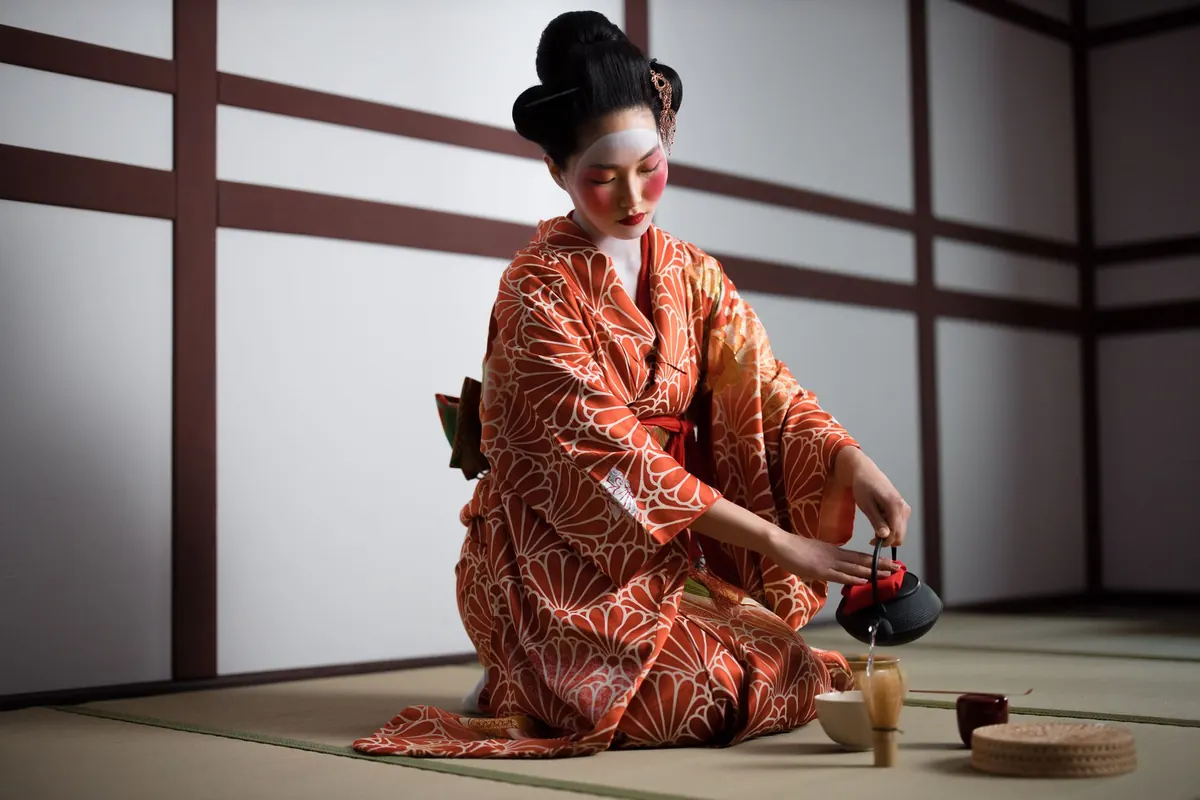
A tea ceremony can run four hours and contain almost no small talk. That is not a mistake. Chanoyu, the Japanese way of tea, is a choreography of small actions — water boiled at the right moment, matcha whisked until it foams, two people bowing at the same instant. Arrive expecting a performance and you will feel clumsy. Arrive expecting a conversation held with objects and a room, and the afternoon opens up.
A Brief History of Chanoyu
Tea came to Japan from China with Buddhist monks, first as medicine and study aid. In the twelfth century, the monk Eisai brought back tea seeds and the practice of whisking powdered green tea, matcha. Zen monasteries took it up seriously: tea kept monks awake through long hours of meditation, and the etiquette around serving it gradually turned into ritual.
By the fifteenth century, tea had moved from temple to tearoom. Murata Jukō is credited with shaping it into a discipline of the mind, and the merchant Takeno Jōō refined the taste for quiet, unshowy objects. Then Sen no Rikyū, the sixteenth-century figure most associated with the ceremony today, pared everything back. He built rooms of plain wood and plaster, used a farmer's water jar if it was beautiful, and taught that a bowl of tea could hold four principles: harmony, respect, purity, and tranquility. His descendants carried the practice forward, and the Sen family lines — Omotesenke, Urasenke, and Mushakōjisenke — still teach chanoyu today, in Japan and well beyond it.
The Room and Its Few Objects
A traditional tea room, the chashitsu, is small — often around four and a half tatami mats, roughly the floor space of a walk-in closet. There is a sunken hearth, an alcove, and not much else. Many rooms are entered through a nijiriguchi, a doorway so low that everyone, whatever their status outside, has to bow to get through. That is the point.
Three things change with every gathering. In the alcove hangs a scroll, chosen for the season or the occasion, and beneath it sits a single flower in a simple vase — chabana, arranged to look as though it simply grew there. The kettle and bowl are seasonal too: a heavier iron kettle in winter, a thinner one in summer that sings differently over the coals.
The plainness is deliberate. Wabi, the aesthetic at the heart of tea, finds beauty in what is modest, worn, and honest. A bowl with an uneven glaze and the potter's fingerprint on it is more welcome than a flawless factory piece. Nothing in the room competes for your attention, so you can notice what is there.
What Actually Happens
A full formal gathering, called a chaji, follows a long sequence. A shorter version — an hour of thin tea, or usucha — trims several steps, so don't be alarmed by the length of the full form.
- Arrival. Guests wait in a small anteroom, change into white socks, and settle themselves.
- Purification. Each guest rinses hands and mouth at the tsukubai, a low stone basin, then enters the tea room one at a time, bowing.
- Viewing. Guests look at the scroll and flowers, then sit and admire the kettle and hearth.
- Meal. In a formal chaji, a light seasonal meal and sake are served, followed by a sweet.
- Charcoal. The host rebuilds the fire in front of the guests — a small, unhurried demonstration.
- Thick tea. Koicha, a syrupy matcha, is whisked and passed around so that guests drink from the same bowl.
- Break. Guests step outside to stretch and rest.
- Thin tea. Usucha is made individually for each guest, and the gathering closes with bows and, if you're lucky, a last look at the utensils.
Etiquette for Guests
Nobody expects a first-timer to be perfect. Hosts care far more about sincerity than flawless form, and saying "I'm new to this, please guide me" is entirely acceptable.
- Bow when you enter and leave the room, and when you receive the bowl. Hands rest on the tatami in front of your knees.
- Don't step on the cloth borders of the tatami mats. Walk on the mat itself, avoiding the edging.
- Take the bowl with your right hand, set it on your left palm, and turn it clockwise twice so the decorated front faces away from your lips.
- Drink in a few sips, and give a light, audible slurp on the last one. It signals you have finished and enjoyed it.
- Wipe the rim with your fingers, then with the folded paper, kaishi, you brought with you, and turn the bowl back before returning it.
- Admire objects out loud. "What a beautiful bowl" is enough. Praising the vessel thanks the host and the maker at once, which is easier than praising the host directly.
- Keep conversation seasonal and gentle. Notice the flower, the weather, the sound of the water. Leave business, gossip, and heavy topics outside.
- Skip the perfume and the big rings. Fragrance interferes with the scent of the tea; jewellery scratches lacquer and ceramic.
The Meaning in the Movements
Almost every step has a practical origin that turned into something more. Rinsing your hands and mouth at the stone basin is literal cleanliness and symbolic leaving-behind. Turning the bowl away from your lips respects the object's "face" and keeps the rim courteous for the next guest. Bowing in unison keeps two people's movements from colliding and quietly acknowledges that neither of you outranks the other in this room.
The guiding idea is ichigo ichie: one time, one meeting. This gathering, with this kettle and these guests and this particular light, will not happen again. That is why the room shifts with the season, why the host spends hours preparing for an hour of tea, and why guests are asked to be present rather than efficient.
If You Want to Attend One
Look for classes and public demonstrations at cultural centers, Japanese gardens, temples, and university clubs; many schools run beginner sessions designed for newcomers. In Japan, an invitation from a friend is the usual way in, and bringing a small wrapped gift — sweets or a seasonal trinket — is a kind gesture.
Dress for sitting on the floor: loose clothing, white socks, nothing tight at the waist. If kneeling in seiza is painful, say so before the gathering starts. Hosts keep small stools and other seating on hand, and adjusting for a guest's comfort is part of the hospitality, not an imposition.
Eat something beforehand if the gathering is tea only, since a full chaji includes a meal and an empty stomach can make three hours feel long. Then slow down. The ceremony rewards attention, and the guest who sits still, watches closely, and drinks the tea while it is warm is doing it exactly right.
Photo: cottonbro studio / Pexels